

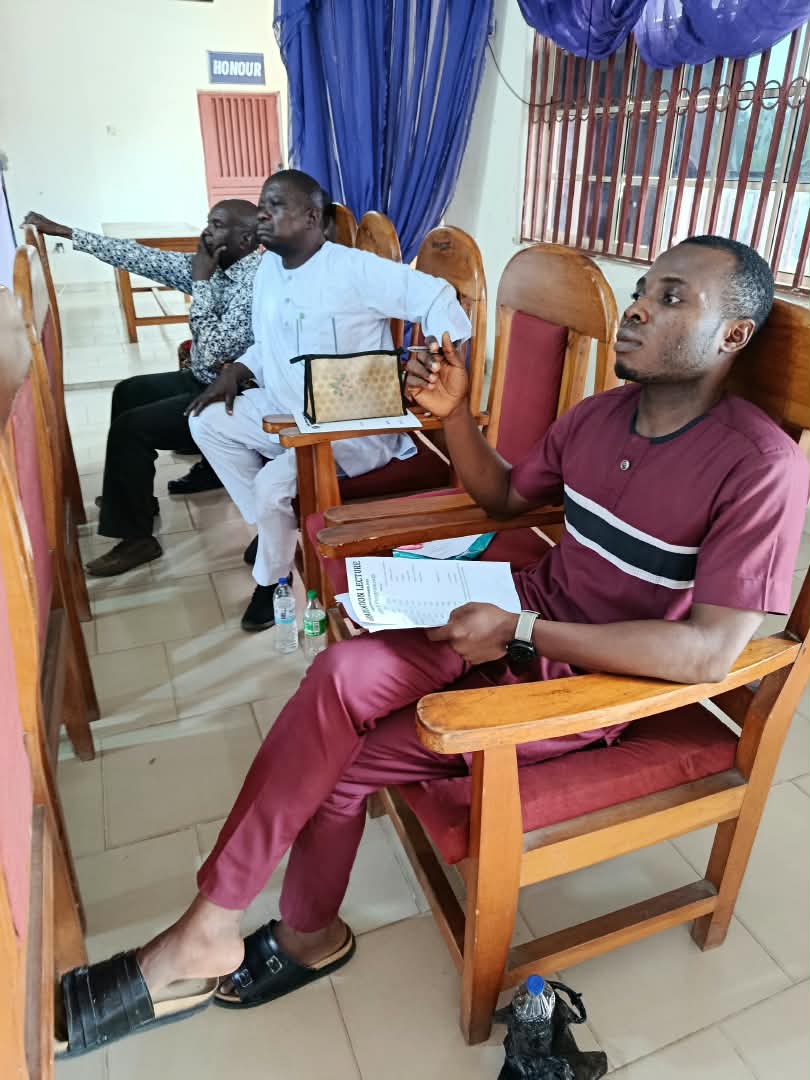
Minister’s First Church Is His Home, Pastor Gbuyiro Tells Seminary Graduates
By Oladapo Samuel Olusola
A cleric, Pastor S.O. Gbuyiro, has charged Christian ministers to give priority attention to their marriages, families and finances, declaring that a minister’s home is his first church and must reflect the values and character of his ministry.
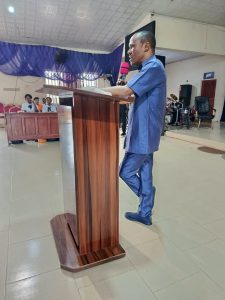
Gbuyiro gave the charge while delivering a graduation lecture titled “The Minister: His Marriage and Finance” at the Christ Apostolic Church Theological Seminary, Ile-Ife, Michael Olowere Campus, Ashi, Ibadan.
The lecture, which examined the relationship between ministry, marriage and financial responsibility, was anchored on the biblical passages of 2 Kings 4:1-6 and 1 Timothy 5:8.
Quoting 1 Timothy 5:8, the cleric stressed the responsibility of believers, particularly ministers, to provide adequately for members of their households.
He said the first assignment of every genuine minister was to his family, stressing that a minister’s home should be a practical reflection of the values, character and principles he preaches to the congregation.
“Your home is your first church,” he declared, warning that failure in the home could undermine the effectiveness of a minister’s calling and public ministry.
Gbuyiro explained that a minister must be a born-again child of God who continues to grow in the grace and knowledge of Jesus Christ until his life increasingly reflects Christ to the world.
He described ministers as custodians of gospel truth and stewards of the mysteries of God, saying they were called to reveal Christ not only through their preaching and teaching but also through their conduct and lifestyle.
Citing Acts 1:1, he noted that the ministry of Christ involved both what He did and what He taught, stressing that ministers must ensure that their conduct was consistent with the messages they proclaim.
The cleric further emphasised that ministers could fulfil their divine calling only through the grace and power of God working in, with and through them.
Using the account of the widow of one of the sons of the prophets in 2 Kings 4, Gbuyiro highlighted the importance of combining spiritual commitment with responsible family and financial management.
According to the biblical account, the widow appealed to Prophet Elisha after the death of her husband, explaining that his creditor was threatening to take her two sons as slaves because of the debt he had left behind.
Gbuyiro observed that although the deceased prophet was described by his wife as a man who feared God, his unresolved financial obligation created serious difficulties for his family after his death.
He said the account offered an important lesson for contemporary ministers, particularly on the need to take responsibility for their families and manage their finances prudently.
On marriage, Gbuyiro described it as a divine institution which ministers must honour, protect and deliberately nurture.
He cited Hebrews 13:4 and 1 Timothy 3:2, 4-5 to emphasise the biblical expectation that a minister should manage his household well and demonstrate responsible leadership within his family.
The cleric noted that marriage was not merely a qualification for entering ministry but a continuing responsibility capable of influencing the effectiveness, continuity and sustainability of a minister’s work.
He urged ministers to build their homes deliberately, intentionally and prayerfully, noting that a healthy marriage could provide the peace, confidence and strength required to confront the numerous challenges associated with ministry.
“Ministry is a family journey,” he stated, urging ministers not to separate their public responsibilities from the obligations they owe their spouses and children.
Gbuyiro also addressed the financial dimension of ministry, noting that the experience of the prophet’s widow demonstrated the devastating effect financial difficulties could have on a family following the death of a breadwinner.
He said the financial challenge inherited by the widow and her children underscored the need for ministers to take financial responsibility seriously rather than treating money matters as irrelevant to their spiritual calling.
According to him, money is an important part of everyday life and can significantly affect marital stability as well as a minister’s ability to meet family and ministry responsibilities.
He cited Ecclesiastes 7:12 and 10:19 to support the practical value of money, alongside wisdom, in providing protection and meeting legitimate needs.
The cleric warned that financial crises could place considerable pressure on marriages when not properly managed, stressing that financial literacy was therefore essential for family stability.
Gbuyiro identified several principles for financial empowerment, including understanding biblical teachings about money, practising faithful giving, developing a positive mindset and pursuing excellence in legitimate endeavours.
He encouraged ministers to consider legitimate sources of income alongside ministry, citing Apostle Paul as an example of someone who combined his apostolic ministry with a vocation.
He also urged them to develop multiple and regular income streams, maximise their God-given abilities and explore legitimate economic opportunities capable of supplementing ministry income.
The cleric advised ministers to build relationships founded on integrity and maintain godly friendships and networks, noting that individuals often require the support, cooperation and expertise of others to fulfil their God-given assignments.
He cautioned ministers against living above their means or engaging in unnecessary competition with others, advising them to live within or below their income and cultivate financial discipline.
According to him, ministers should prepare budgets for their families, avoid impulsive spending and develop a strong culture of saving.
He also cautioned against indiscriminate borrowing, urging ministers to understand the implications of debt and acquire the financial knowledge necessary to manage, preserve and multiply their resources responsibly.
Gbuyiro further encouraged the graduating students to build assets rather than liabilities, own legitimate ventures and develop valuable skills capable of generating sustainable income.
Using the biblical accounts of the widow’s oil and David’s encounter with Goliath, he encouraged ministers to identify and maximise the resources, opportunities and abilities already available to them.
He urged them to develop the capacity to take calculated risks, while conducting adequate research and exercising due diligence before committing resources to investments or business opportunities.
The cleric stressed that financial responsibility should not be regarded as being opposed to spirituality, arguing that financial resources were necessary for the effective running of legitimate ministry activities and the fulfilment of family responsibilities.
He noted that the early Christian church also recognised the importance of financial resources in advancing the gospel, citing 2 Corinthians 9 and Philippians 4.
Gbuyiro further referenced Luke 8:1-3, where women supported Jesus and His ministry from their resources, as evidence of the role financial support played in Christ’s earthly ministry.
He therefore urged ministers not to shy away from discussions about money, stressing that ignoring financial realities could expose families and ministries to avoidable difficulties.
In his concluding remarks, Gbuyiro stressed that success in ministry should encompass success in marriage and responsible management of family resources.
He urged ministers to deliberately build healthy marriages and homes, maintaining that the condition of a minister’s family could have a significant bearing on the effectiveness of his ministry.
“Failure in marriage is failure in ministry,” he declared, urging ministers not to become careless with their marriages while remaining committed to their spiritual calling.
Gbuyiro charged the graduating students to enter the next phase of their ministry with a balanced understanding of spiritual responsibility, marital commitment and financial discipline.
He encouraged them to build homes that would support their callings, manage their resources wisely and ensure that their private lives remained consistent with the gospel they publicly proclaim.
Earlier, the Dean of Student Affairs congratulated all the graduating students across the various categories of programmes offered by the institution, including certificate, diploma and pioneer degree graduates, for successfully completing their respective studies.
He commended the students for their perseverance, commitment and dedication throughout their academic journey and prayed that God, who had called them into ministry and supported them throughout their studies, would continue to be with them and guide them in their future endeavours.
In his welcome address, the Coordinator of the Seminary expressed his appreciation to the guest speaker, Pastor S.O. Gbuyiro, for honouring the institution’s invitation despite his busy schedule.
The Coordinator described Gbuyiro as a distinguished alumnus and former Registrar of the Seminary, as well as the immediate past National Youth Coordinator of the Christ Apostolic Church, Nigeria and Overseas. He added that Gbuyiro currently serves as Chairman of the District Coordinating Council (DCC) of the Christ Apostolic Church, Mokola DCC.
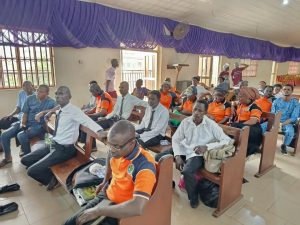
He also expressed delight at the impressive turnout of students for the graduation lecture, describing their presence as a demonstration of their commitment to the programme and activities of the Seminary.
The Coordinator urged the students to sustain the same level of enthusiasm and participation throughout the remaining activities lined up for the graduation programme, stressing the importance of making the entire graduation ceremony memorable and successful.