

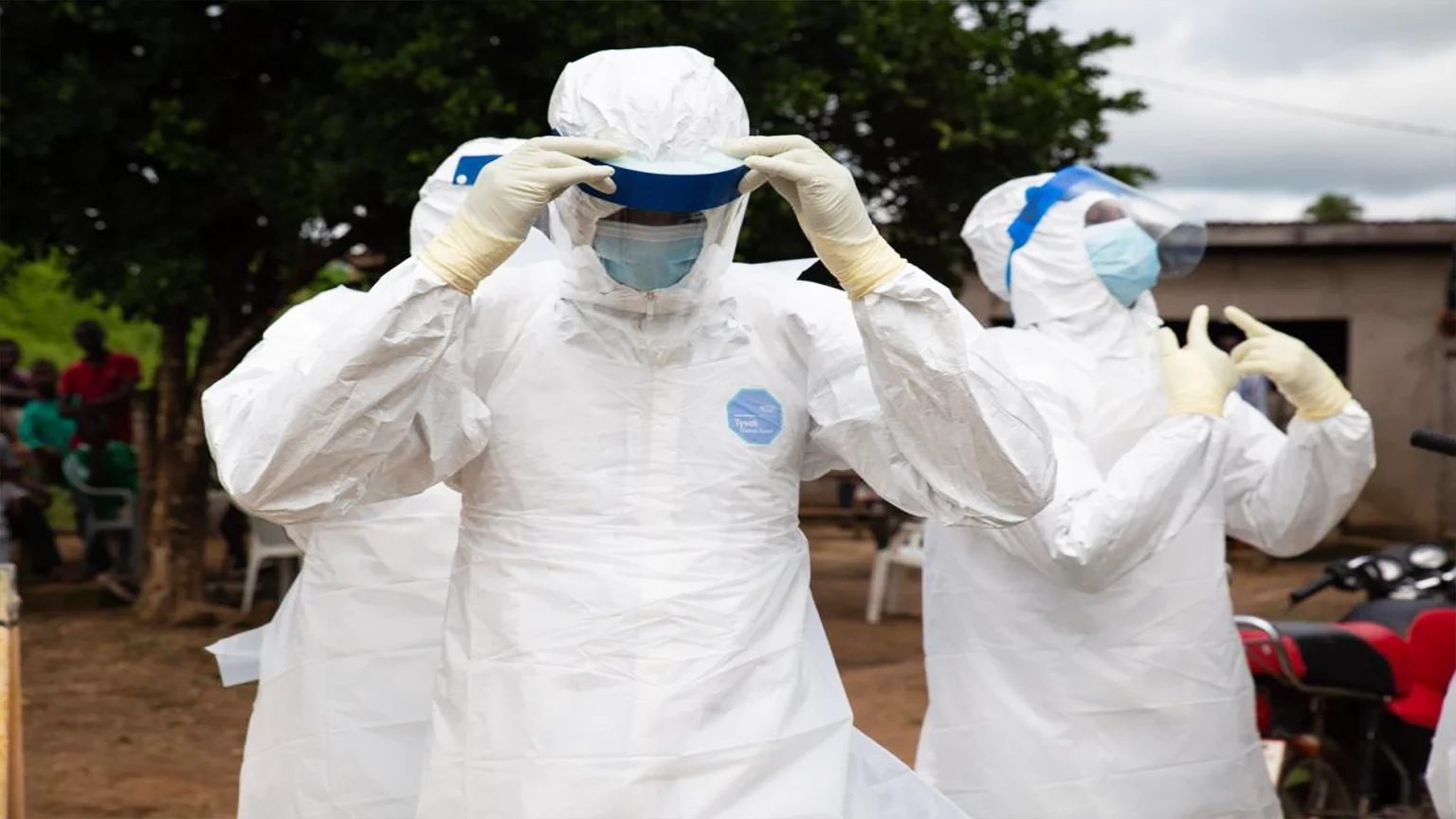
Coordinating Minister of Health and Social Welfare, Ali Pate, in a statement, said the development followed a laboratory confirmation of the case.
The patient, a woman who recently arrived in Nigeria on an international flight from Uganda, was admitted to a private hospital in the FCT, where she received care for several days before the diagnosis was confirmed.
1. What is Ebola disease?
Ebola disease is a rare but severe illness, caused by a virus belonging to the genus orthoebolavirus of the Filoviridae family. Death rates have varied from 25% to 90% in past outbreaks.
According to WHO, six species of orthoebolaviruses have been identified to date, with three known to cause large outbreaks: Ebola virus (EBOV) causing Ebola virus disease (EVD), Sudan virus (SUDV) causing Sudan virus disease (SVD) and Bundibugyo virus (BDBV) causing Bundibugyo virus disease (BVD).
2. What are the typical symptoms of Ebola disease?
The symptoms of Ebola disease, according to WHO, can be sudden and can include: fever, fatigue, muscle pain, headache and sore throat. These can be followed by: vomiting, diarrhoea, rash internal and external bleeding.
3. How long does it take for people to develop symptoms after being infected?
WHO revealed that the time interval from infection to onset of symptoms ranges from 2 to 21 days. People are only infectious once they develop symptoms. Even when people have developed Ebola disease-like symptoms, only a laboratory test can confirm whether the cause is Ebola.
4. What is the difference between Ebola disease and other diseases with similar symptoms?
Ebola disease symptoms often appear suddenly and require early care by trained clinicians. Because of the similarity of symptoms, it can be difficult to clinically distinguish Ebola disease from other infectious diseases such as malaria, typhoid fever, dengue or Marburg virus disease.
Therefore, it is essential that people with Ebola disease-like symptoms seek advice immediately from a health-care provider. Testing is the first step in identifying accurately what is causing illness and is essential for providing the right treatment. Early testing and treatment save lives and protect community and family members, including local healthcare workers.
5. How does Ebola disease spread?
Ebola disease most commonly spreads from person to person via exposure to blood or other body fluids (mostly through faeces, vomit, sweat and saliva) of an infected person, alive or deceased. This occurs when the virus enters a body through broken skin or mucous membranes (such as the eyes, nose or mouth), most often while someone is caring for a patient or touching the body of someone who has died from the disease.
It is also spread by touching or handling objects that have been contaminated with the body fluids of a sick person or someone who has died from Ebola disease. In rare instances, transmission from a male survivor to his sexual partner has been documented. This is because the virus can persist for some time in the semen of some male survivors after they recover from the disease.
6. What should people do to protect themselves during an Ebola disease outbreak? What should people also do to protect themselves from getting infected from animals?
In case of an Ebola disease outbreak, WHO has advised people to protect themselves by taking specific measures that reduce the risk of infection. These include: avoiding physical contact with individuals who are suspected of or confirmed to have Ebola disease; refraining from handling the bodies of people who had symptoms of Ebola disease and have died, without appropriate protective measures; and washing hands regularly, applying best practices recommended by local authorities on hand washing.
7. Who is most at risk?
During an outbreak, those at higher risk of infection are: health and care workers in close contact with patients; caretakers, family members or others in direct physical contact with infected people; and mourners who have direct physical contact with bodies during funerals or burial rituals.