

• President says infrastructure spending key to $1tr economy by 2030
• Labour questions borrowing despite higher revenue, rising oil earnings
• Atiku’s aide, NDC demand project costs, repayment schedule, debt register
• Shettima urges FG to address public concerns over economic reforms
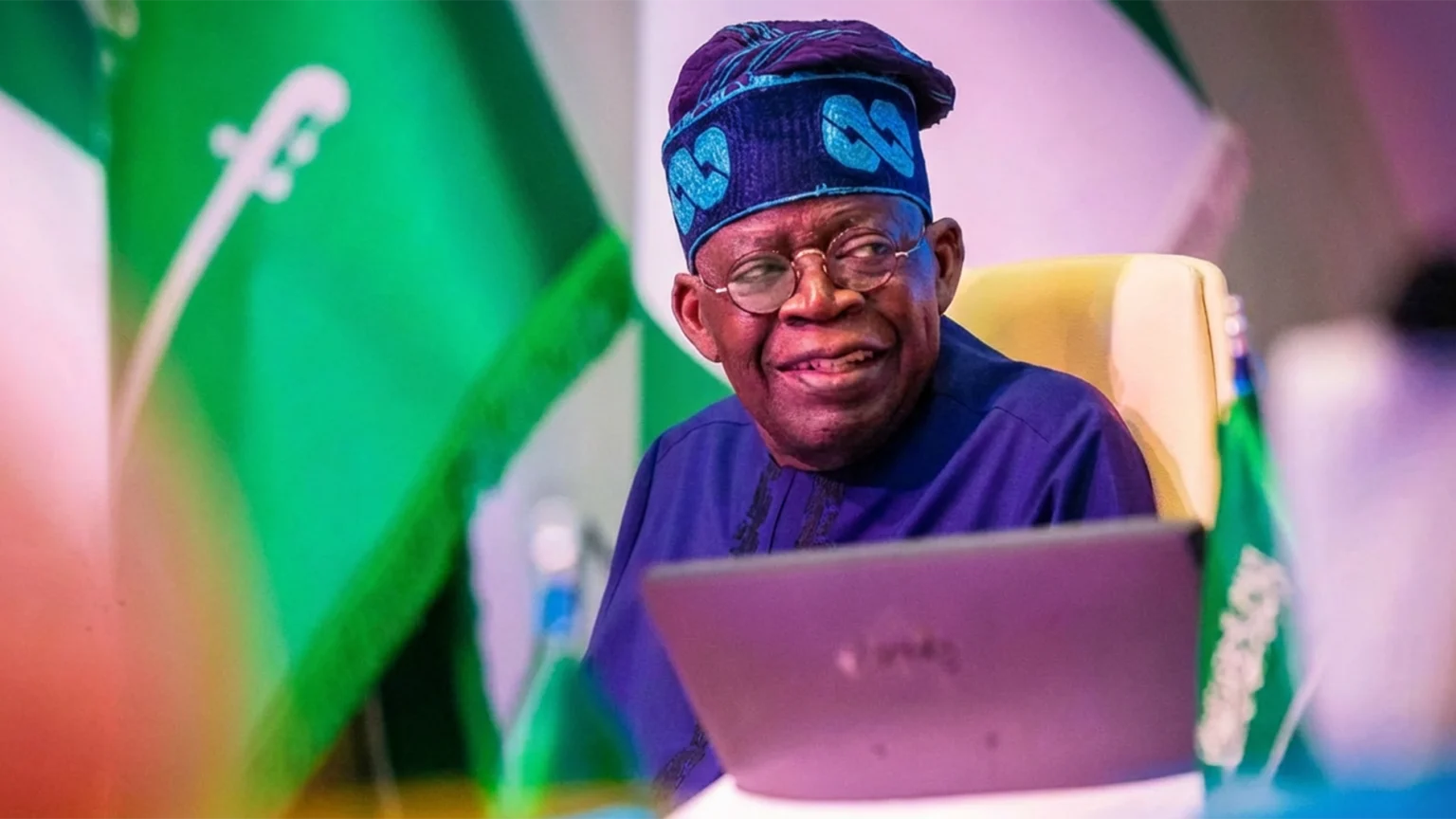
President Bola Tinubu has defended his administration’s fresh external borrowing plans, arguing that infrastructure investments are critical to achieving a $1 trillion economy by 2030, as the Nigeria Labour Congress (NLC) and opposition figures question the justification for further loans amid rising public debt and pressure on household incomes.
In an essay titled “From Reforms to Delivery: Our Infrastructure Investment and Growth Strategy,” the President maintained that public borrowing should be assessed by the economic value it generates rather than the amount raised, insisting that investments in roads, electricity, rail and commercial ports would expand productive capacity, create jobs and attract private capital.
The defence comes as Tinubu seeks National Assembly approval for external borrowing facilities of $20.52b and €1.045b under the Federal Government’s 2026–2027 Supplementary External Borrowing Rolling Plan, covering projects and programmes across several sectors.
But labour leaders and opposition figures have demanded greater transparency over the proposed loans, asking the government to explain why additional borrowing remains necessary despite claims of increased revenue following the removal of the petrol subsidy.
They have also called for comprehensive details of the projects to be financed, including costs, implementation schedules, interest rates, repayment obligations and independently verified economic benefits, before the National Assembly approves the request.
Tinubu: Borrowing must deliver economic value
DEFENDING the administration’s strategy, Tinubu identified the Lagos-Calabar Coastal Highway, Sokoto-Badagry Superhighway, Trans-Sahara Superhighway, electricity grid upgrades and modernisation of major commercial ports in Lagos as key projects expected to strengthen Nigeria’s economic competitiveness.
According to him, the investments, alongside spending on healthcare, education and vocational training, would connect economic regions, lower logistics costs, unlock agricultural and industrial potential and attract private capital.
He projected that the Lagos-Calabar Coastal Highway could reduce logistics costs along its corridor by 15 to 20 per cent and contribute up to two per cent to the country’s Gross Domestic Product through expanded trade, tourism and industrial activity.
He added that the project could generate about 100,000 direct jobs in construction and engineering, alongside more than 150,000 indirect jobs across logistics, building materials and related services.
“We are not simply building highways. We are opening economic corridors, connecting markets, unlocking industries and reshaping Nigeria’s economic geography,” he said.
The President maintained that achieving his administration’s ambition of building a $1tr economy by 2030 would require sustained infrastructure investment to support higher productivity, industrialisation and trade.
“We cannot build a USD 1 trillion economy with infrastructure designed for an economy a fraction of that size,” he said.
Tinubu also cited what he described as improvements in key economic indicators following reforms introduced since May 2023, including the removal of petrol subsidy, unification of the foreign exchange market, tax reforms and measures to contain inflation.
He said real GDP growth reached 4.43 per cent in the second quarter of 2026, while headline inflation declined to 14.63 per cent in September from 20.98 per cent a year earlier.
Gross external reserves, he added, stood at $55.1b as of October 9, 2026, including approximately $46b in net reserves, while the country’s tax-to-GDP ratio rose to 12.5 per cent from seven per cent.
According to the President, the reforms had strengthened public finances, improved Nigeria’s standing in international financial markets and created opportunities to attract long-term investment.
“Confidence has a price; our cost of borrowing is going down, and the country’s risk premium has drastically decreased,” he said.
He argued that positive assessments by international credit rating agencies reflected improvements in external reserves, macroeconomic management and financial credibility, which could help Nigeria secure longer-term financing at more competitive rates.
The administration, he said, was working to redirect public borrowing from meeting short-term fiscal pressures towards investments capable of generating economic returns, creating jobs and expanding opportunities for future generations.
Tinubu also said longer-term financing arrangements would align repayment obligations with the useful lives of infrastructure assets, reduce refinancing pressures and support productive investments.
He outlined five priorities for the next phase of the Federal Executive Council’s economic strategy: ensuring food affordability and energy price stability; harmonising budgets and strengthening fiscal discipline; completing high-impact projects and investing in critical infrastructure; improving the economic policy framework and regulatory efficiency; and providing targeted household support while investing in human development.
The President said the administration’s success would ultimately be measured by completed projects, increased investment, job creation and improved living standards rather than the amount of financing secured.
“Securing financing is not the achievement. Completing the project, delivering value and improving the lives of Nigerians is the achievement,” he said.
NLC questions need for fresh borrowing
HOWEVER, the NLC has challenged the justification for continued external borrowing, arguing that the government’s claims of increased revenue following the removal of petrol subsidy require an explanation of why more loans are still needed.
Speaking on Channels Television’s The Morning Brief yesterday, NLC President Joe Ajaero questioned the government’s decision to seek fresh loans from international financial institutions despite its reported increase in revenue.
“If you come out to tell us that the subsidy is gone, that you are making more money and then you are giving more money to states, what is the justification for continually borrowing from the International Monetary Fund and the World Bank and other agencies when there is enough money?” he asked.
Ajaero also cited rising crude oil prices, which he attributed to tensions in the Middle East, as grounds for reconsidering the borrowing plan.
He questioned whether the government should continue seeking loans when the 2026 budget was based on a crude oil benchmark of $70 per barrel, while prices had risen above $100 per barrel amid the US-Iran crisis.
“If the 2026 budget was prepared with crude oil price benchmarked at $70 per barrel and now sells above $100 per barrel due to the US-Iran crisis, should this country still be collecting loans?” he asked.
The labour leader argued that increased oil earnings and revenue accruing to oil-producing states should prompt the government to explain the need for additional external financing.
While acknowledging that the NLC had no authority to approve or reject government loans, Ajaero urged Nigerians and relevant institutions to demand greater accountability, noting that the National Assembly could reject the borrowing request.
Atiku’s aide demands repayment schedule, project details
SIMILARLY, Paul Ibe, media aide to former vice president Atiku Abubakar, has challenged the government to disclose the full terms of the proposed borrowing, including the projects to be financed and how the loans would be repaid.
In a post on X, Ibe faulted the characterisation of the plan as investment rather than borrowing, arguing that the funds would still have to be repaid with interest.
He demanded a breakdown of the 46 proposed projects across 11 sectors, including their costs, locations, implementing agencies, procurement records and completion schedules.
Ibe also questioned the financing terms, citing a reported average interest rate of about 2.1 per cent for the proposed $5b World Bank component and an indicative average rate of 7.8 per cent for the commercial component.
He asked the government to publish the repayment schedule and explain how Nigeria would service the loans if oil earnings declined, the naira weakened or projects were delayed.
He further demanded feasibility studies and independently assessed costs for major projects, including the Lagos-Calabar and Sokoto-Badagry highways and the Kano-Kaduna rail project.
The aide urged the government to clarify whether any of the proposed projects already had budget allocations or approved financing, and to identify the states and agencies expected to receive the funds and shoulder the repayment obligations.
“Nigerians understand the need for infrastructure. They also understand that an inflated contract, an abandoned project or an unrealistic revenue forecast can leave them paying for promises that never materialise.
“Calling debt an investment does not answer who will pay, how much, or for how long,” Ibe said.
NDC warns of rising debt burden
THE National Democratic Congress (NDC) National Presidential Campaign Council has also questioned the country’s capacity to sustain further borrowing, warning that mounting public debt could impose significant obligations on future generations.
In a statement signed by its spokesperson, Dr Chiogo Constance Ikokwu, the council said Nigeria’s external debt rose from $43.16b in June 2023 to $54.52b in June 2026, an increase of $11.36b, or 26.3 per cent.
It also said total public debt increased from N87.38tr to N166.79tr within the same period, representing an increase of approximately 90.9 per cent.
The council warned that the latest borrowing request, alongside previously approved but undrawn financing, could raise Nigeria’s potential external debt exposure to about $81.96b, assuming there was no overlap and all the financing was eventually drawn.
It described the figure as an illustrative estimate rather than official debt outstanding.
While acknowledging that borrowing could support national development, the NDC questioned whether previous loans had delivered measurable improvements in infrastructure, electricity supply and public services.
“But Nigerians deserve to know precisely what these loans will deliver. Which roads have been completed? Which hospitals are operational? Which power projects have increased electricity supply? Where are the measurable benefits for businesses and households struggling with the cost of living?” the statement asked.
The council also questioned the need for further borrowing despite claims of increased government revenue and concerns raised by lawmakers over inadequate capital releases to ministries, departments and agencies under previous budgets.
It called on the President and the National Assembly to publish a comprehensive register of external loans obtained since May 2023, detailing amounts borrowed and disbursed, loan terms, project locations, implementation status and independently verified outcomes.
The council further urged lawmakers to demand a clear assessment of future debt-service obligations and the risks associated with exchange-rate movements before approving additional borrowing.
Shettima seeks greater public trust in reforms
AMID the growing debate over the government’s economic policies, Vice President Kashim Shettima has urged the Federal Government to pay greater attention to Nigerians’ concerns, stressing that public trust depends on transparent communication, verifiable progress and responsiveness to citizens’ experiences.
Shettima, represented by his Special Adviser on Economic Affairs, Dr Tope Fasua, made the call yesterday at The Duke’s Masterclass 2026 in Abuja.
He defended the administration’s economic reforms, including the removal of petrol subsidy, foreign exchange market liberalisation, fiscal restructuring and revenue mobilisation, describing them as efforts to correct longstanding economic distortions and strengthen productive capacity.
However, he said the success of the policies depended not only on implementation but also on the government’s ability to demonstrate tangible results and listen to the experiences of Nigerians.
“The government must continue to communicate, however, its policies clearly, demonstrate progress with credible evidence, and listen attentively to the experiences of citizens,” he said.
Shettima urged professionals, business leaders and the middle class to acknowledge the pressures confronting ordinary Nigerians while helping to explain the objectives of the reforms.
He said constructive criticism and public participation were essential to effective governance, adding that the implementation of policies should remain responsive to evidence and changing economic conditions.
The Vice President also identified unreliable electricity, inefficient transportation, insecurity, limited access to finance and weaknesses in education and public institutions as persistent constraints on economic growth.
He called for increased domestic production, expanded exports and greater support for small businesses, with particular attention to ensuring that economic opportunities reached women, young people and rural communities.