

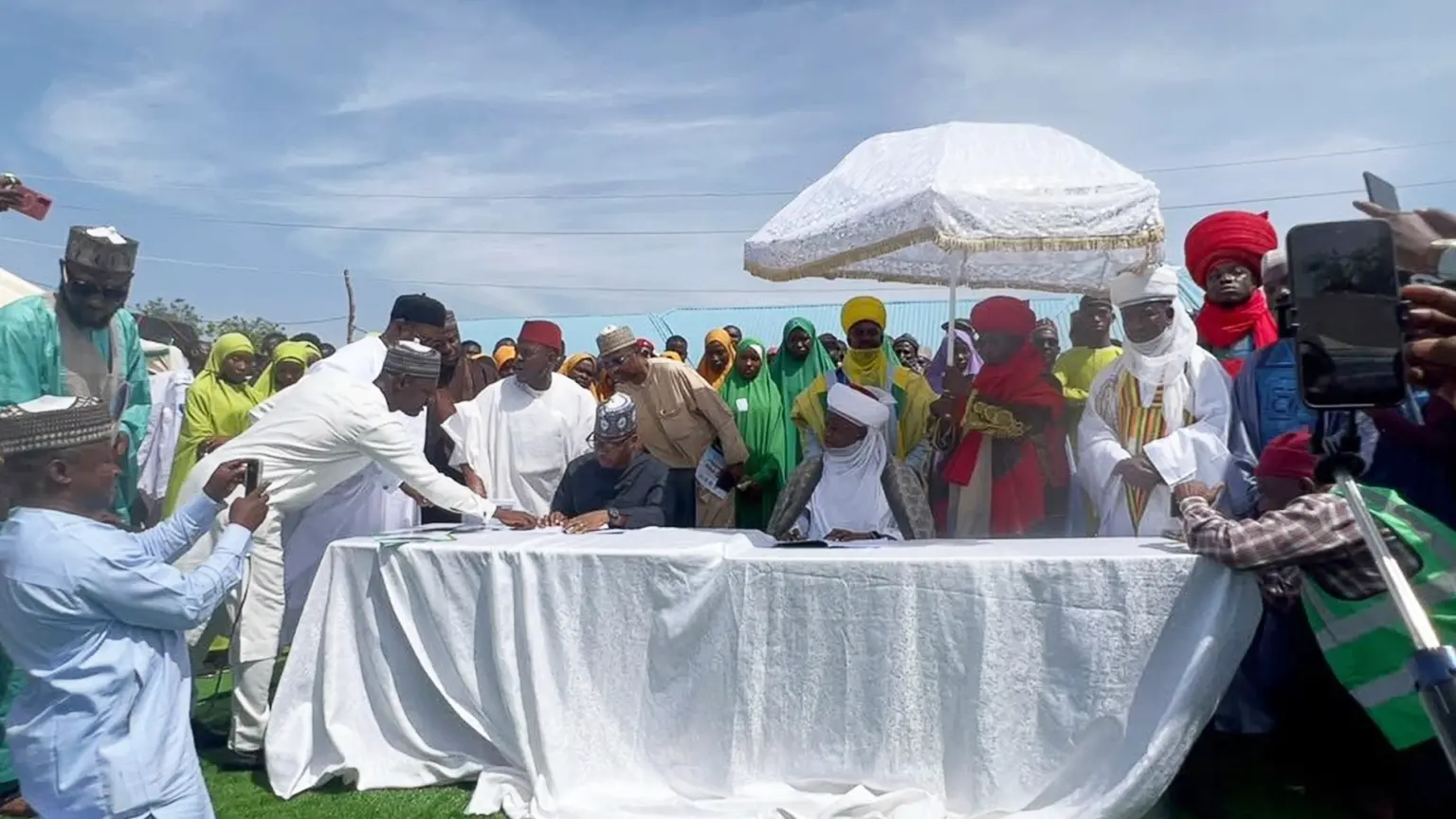
The Universal Basic Education Commission (UBEC) has partnered with the Sultan Foundation for Peace and Development to mobilise traditional and religious leaders in tackling Nigeria’s out-of-school children crisis.
The partnership, formalised through a Memorandum of Understanding (MoU), will leverage the influence of traditional institutions to identify out-of-school children, facilitate their enrolment and strengthen community participation in school attendance and retention.
The initiative will also involve household-level mobilisation, advocacy and monitoring of children’s transition through basic education, particularly in underserved communities where poverty, cultural barriers and other social challenges continue to limit access to schooling.
Speaking at the signing ceremony, UBEC Executive Secretary, Aisha Garba, represented by the Deputy Executive Secretary (Technical), Rasaq Akinyemi, said traditional and religious leaders were critical to expanding access to education because of their influence on family decisions and community values.
She said the partnership aligned with President Bola Tinubu’s Renewed Hope Agenda and the education reforms being driven by the Minister of Education, Dr Maruf Tunji Alausa, particularly efforts to improve access, infrastructure, teacher capacity and learning outcomes.
Under the agreement, UBEC and the foundation will establish national, state and local coordinating committees to drive advocacy and grassroots mobilisation.
The partnership will also see the development of advocacy materials in Hausa, Fulfulde and Yoruba, while traditional and religious leaders will encourage families to enrol their children, promote girls’ education and address cultural practices that keep children out of school.
Garba said the agreement would introduce accountability mechanisms to recognise communities, schools and traditional leaders recording measurable progress in enrolment, attendance and retention.
She disclosed that UBEC, working with the Federal Ministry of Education and State Universal Basic Education Boards, had facilitated the construction of more than 4,900 classrooms and renovated existing school facilities across the country.
The interventions, which also include the provision of water, sanitation and hygiene facilities, had directly benefited more than 2.3 million learners by the end of 2025, she said.
According to her, the commission has also intensified community-driven school improvement programmes and teacher professional development to strengthen school management and improve learning outcomes.
She, however, stressed that government investment alone would not resolve the country’s education challenges without stronger community ownership and the involvement of grassroots institutions.
The Deputy Governor of Kebbi State, Senator Umar Abubakar Tafida, who represented Governor Nasir Idris, commended the Sultan Foundation for its contributions to health and social development, particularly interventions supporting vulnerable children.
He said the state valued the foundation’s efforts to improve educational opportunities for disadvantaged children, describing its commitment as consistent with the principles of Islam and humanity.
Garba said the success of the partnership would ultimately be measured by increased enrolment, improved attendance and retention, better learning outcomes and a sustained reduction in the number of out-of-school children.
She assured that UBEC would deepen collaboration with state governments and other stakeholders to consolidate ongoing reforms and ensure more Nigerian children have access to quality basic education.