

Currently saddled with the task of meeting United Nations Sustainable Development Goal of reducing poverty in all its forms and dimensions by at least half in 2030, the latest Multidimensional Poverty Index (MPI) released by the United Nations Development Programme (UNDP) and the Oxford Poverty and Human Development Initiative (OPHI)few days ago revealed that the country is nowhere near the projection of reducing multidimensional poverty, as both the proportion of people affected and their total number are rising at an alarming rate.
The findings come amid continued concern over the rising cost of living and the pressure on household welfare in the country. Only in April 2026, the World Bank reported that Nigeria’s poverty rate had increased from 56 per cent in 2023 to 63 per cent in 2025, leaving about 140 million people in poverty.
The bank attributed the trend partly to household incomes failing to keep pace with rising living costs and weak growth in agriculture, a sector that provides livelihoods for many poor Nigerians.
Currently, millions of Nigerians are grappling with food insecurity to the rising poverty, hunger and declining public confidence, with many households being pushed to the brink and on the verge of eating from the wastes bins.
Hence, on the occasion of this year’s food day commemoration, with the theme, “Innovate Today, Nourish Tomorrow,” rather than optimism on food and other agro-based commodities price drop, the revelation from stakeholders indicate a situation of hopelessness.
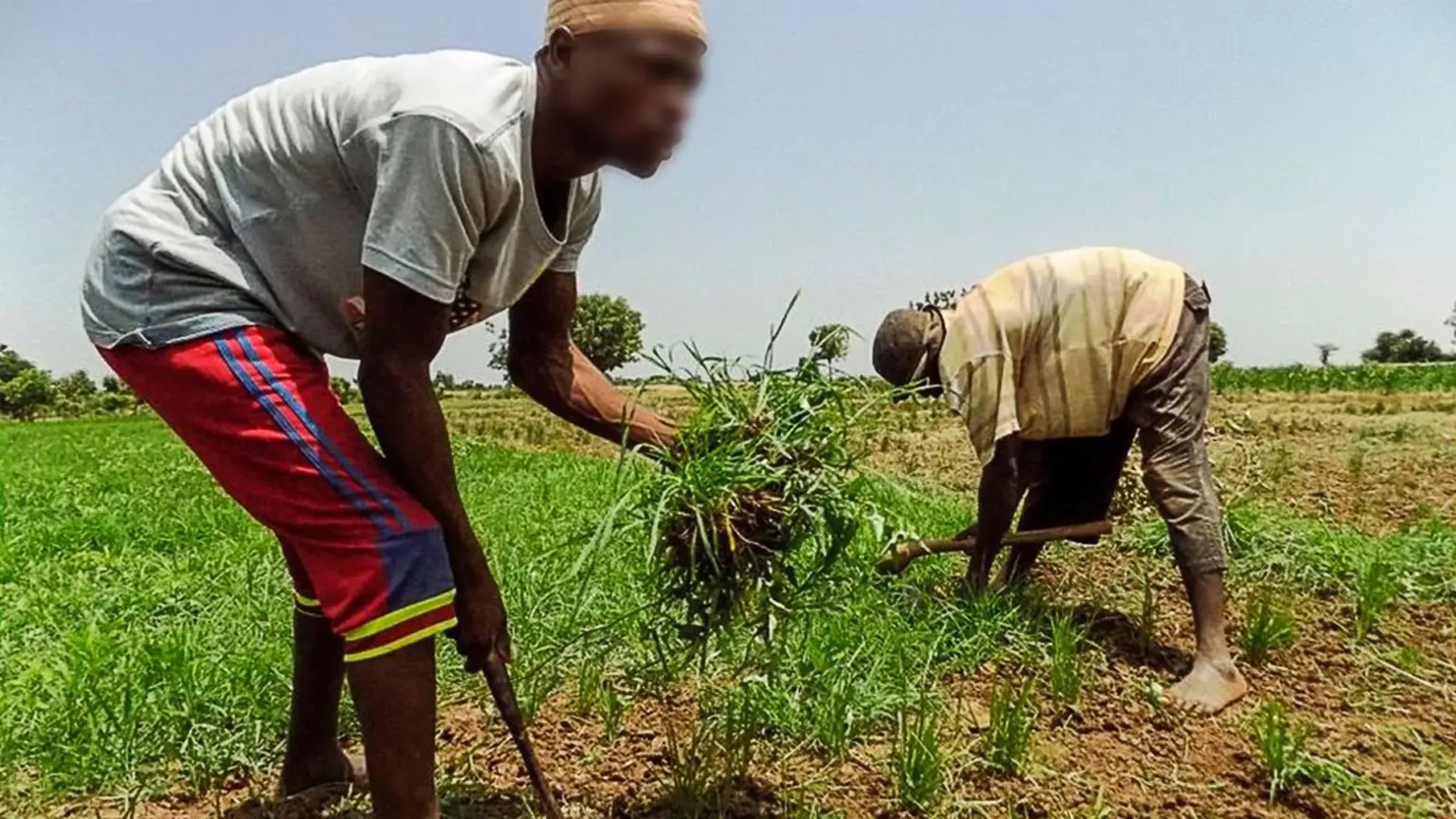
They told The Guardian that while climate change is having its toll on farmers, with excess rain and longer periods of drought becoming order of the day, the cost of inputs and others has reduced the number of practicing farmers, as those left in the profession can barely afford it, hence, the low yields from their efforts.
Celebrated yearly on October 16 across the globe, the day provides an important opportunity for the global community to renew its commitment to the fight against hunger, malnutrition and food insecurity.
The day also commemorates the founding of FAO of the United Nations in 1945, reflecting the enduring global effort to build food systems that can adequately nourish present and future generations.
Beyond the commemoration, the day serves as a rallying point for governments, development partners, farmers, private-sector actors, researchers, innovators and communities to work together towards sustainable food systems and a future where everyone has access to sufficient, safe, nutritious and affordable food.
According to the world body, ending hunger is within reach. The world already produces enough food to nourish everyone, yet 645 million people still face hunger, and 2.69 billion cannot afford a healthy diet.
In Nigeria, stakeholders and industry players believe that ending hunger in the country is within reach, especially owing to the large expanse of arable land across the geo-political zones, the population and temperate weather condition, however, conflict, economic instability and climate shocks put pressure on agrifood systems, therefore, the challenge is how to ensure access to reliable, affordable and nutritious food for the citizens across the country.
For Nigeria to feed its growing population, innovation is no longer an option but a necessity. This shows the urgent need to continuously explore new and smarter ways of increasing agricultural productivity, reducing post-harvest losses, improving processing and storage, strengthening food distribution networks, expanding market access, creating decent employment opportunities to tackle the menace of food insecurity.
This year’s theme, ‘Innovate Today, Nourish Tomorrow’, is a call for renewed commitment to innovation, technology, research and sustainable practices across the agricultural value chain.
The Federal Government policies appear to be only on paper. For successive administrations, it’s being a case of motion without movement, as none of the launched initiatives seemed to be working.
For instance, the National Agricultural Technology and Innovation Policy (NATIP) 2022–2027 was launched to address the changing dynamics in the agricultural sector owing to climate change.
The five-year policy seeks to improve agricultural productivity through research, mechanisation, extension services, irrigation, digital agriculture and climate-smart farming.
Unfortunately, four years down the lane, the uptake of technology by Nigerian farmers remains at its lowest ebb, particularly, in mechanisation, irrigation, improved seeds and digital farming tools.
According to the 2024 statistics from FAO, less than one per cent of farming households owned tractors. Another report by the organisation in 2025 showed that 70 per cent of farmers still depend on crude implements.
Reports have it that only three states have tractors for farming. Unfortunately, where these tractors and other equipment are available, the cost of hiring them is far beyond the reach of these farmers.
Investigations showed that the average rental rate of a tractor, which was around N80, 000 per day in 2023, covering about 10 hours of work, increased to N205, 000 per day in 2025. This increase hinged on several factors – rising fuel costs, inflation, higher maintenance expenses, and the increasing cost of spare parts.
Even, the farmers who have the funds to acquire the tractors are being frustrated by government policies, especially the exorbitant tariff placed on imports. For instance, one of the stakeholders, Nnaemeka Obiaraeri, said he cleared a tractor he bought for N33m, with a whooping sum of N15m.
On the issue of improved seedling, a review of the Nigerian seed system by some agricultural scientists put the adoption of improved seeds by rural farmers at nine per cent, while about 42 per cent of farmers still use inorganic fertilisers.
Some of the challenges attributed to this problem include inconsistent seed quality, limited regulatory oversight, and inadequate awareness among farmers. These gaps have hindered the effective adoption of quality seeds, including biofortified varieties that can combat malnutrition.
The adverse effect of climate change is another big issue. While it appears Nigerian farmers are embracing climate-resilient crop varieties, the adoption is very slow. The recent climate-related disruptions in some parts of the country laid credence to this, as crops were destroyed either by flooding or drought. While drought-resistant maize, high-yield cassava and improved rice varieties are gaining tractions among farmers in serious countries, the Federal Government is still paying lip service to this.
Though the advent of agro-tech innovations like Thrive Agric and Farmcrowdy, among others, is on the rise in the country, to revolutionise the agricultural landscape, helping rural farmers gain access to funding, market and technical expertise, providing them with real-time weather updates, and agricultural best practices, it’s still like a drop in the ocean because their interventions and penetrations is still in the surface compared to large number of farmers in the country.
Experts claim that while the advancement in mechanisation and technology are encouraging, challenges such as poor infrastructure, inadequate storage facilities, access to arable land and post-harvest losses have been serious challenges drawing back the level of progress.
The administration of Muhammadu Buhari made a renewed focus aimed towards repositioning the sector through initiatives like the Anchor Borrowers Programmes (ABP). It was a laudable initiative that provided opportunities for small-scale farmers to get soft loans to improve their farming techniques and expand their businesses, but the scheme was squandered as most of the funds got into the hands of ‘political farmers’, while several millions of naira remained unpaid till date.
The Founder of Menitos Farm Depot, Lagos, Toluwalope Daramola, said though the lingering food crisis is mostly put down to insecurity and climate change, the efforts to transfer the country’s agriculture sovereignty cannot be ignored, as it has also been a factor to the issue of food crisis.
“Small farmers are steadily getting pushed out by big firms and they are more profit oriented and cannot be bothered with food availability. To change things in the sector, we need to farm with the consciousness of climate change. We need to adapt to round-the-year farming and also invest in processing. We need a system that does not place farmers’ investment and food availability at the mercy of a currently dynamic climate,” she said.
The Strategic Communications Lead of Keselash Agricom, Feyikemi Adurogbangba, attributed the low uptake of innovations by Nigerian farmers to poor communication and inadequate storytelling about agricultural innovations.
She said, “we believe communication should be treated as critical infrastructure for scaling and sustaining innovation in the food system.”
“Beyond creating visibility, impact-driven and human-centred storytelling can document what works, share lessons from implementation, build trust, connect stakeholders and foster the partnerships and collaborations needed to replicate successful solutions in other communities and contexts.