

Yoruba Self-Determination Group Renews Call for Oduduwa Republic, Proposes Controversial Regional Policies
IBADAN — The Yoruba Self-Determination Movement (YSDM) has renewed its call for the establishment of an independent Oduduwa Republic, while proposing a series of legislative and policy measures aimed at addressing security concerns, protecting indigenous interests and regulating commercial activities across areas it identifies as Yorubaland.
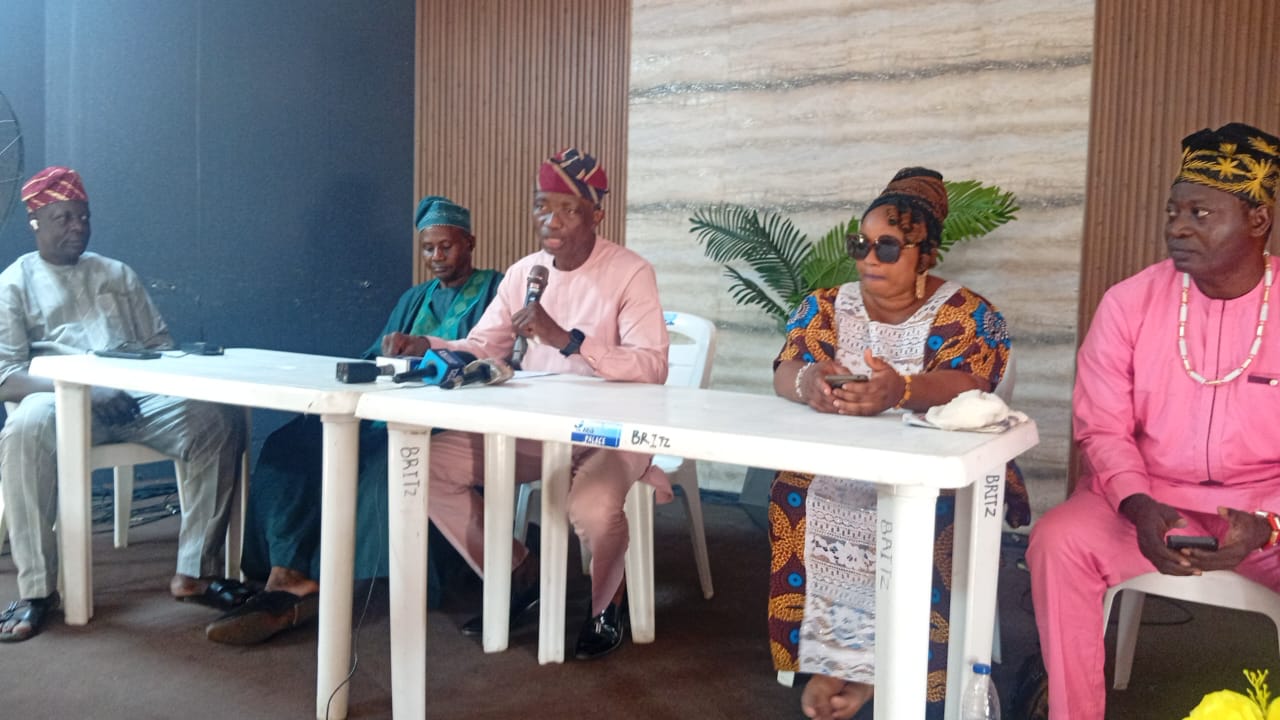
The movement made its position known at a press conference organised by the Yoruba Action Group at the Nigeria Union of Journalists (NUJ) Press Centre, Iyaganku, Ibadan, on Wednesday, October 28, 2026.
Speaking at the event, the Deputy Leader (Homeland) of the movement, Architect George Akinola, said the organisation had lost confidence in restructuring, resource control and regionalism as solutions to Nigeria’s political and security challenges.
According to him, the movement believes that the establishment of an independent Oduduwa Republic would provide an alternative framework for addressing the political, economic and cultural aspirations of the Yoruba people.
Akinola recalled that the organisation had expressed concerns about Nigeria’s political direction between 2017 and 2022, arguing that repeated efforts to reform the country’s governance structure had not produced the desired results.
He maintained that the movement’s agitation for self-determination was driven by what it described as persistent insecurity, disputes over territorial identity and concerns about the protection of indigenous communities’ economic interests.
“The Yoruba people are angry and fed up with Nigeria. What we desire most, at this time, is to become a sovereign nation, separate from dysfunctional Nigeria and its many encumbrances on Yoruba potential,” Akinola said.
The movement cited alleged incidents of kidnapping, killings, attacks on farmers and other security challenges in parts of the South-West as reasons for its renewed campaign. It also expressed concerns about competition in commercial centres, land ownership and political representation.
Among its proposals, the group called on governors and members of the National and State Assemblies across the region to consider legislation addressing land administration, commercial activities, migration and political participation.
One of its most controversial demands was a proposal to restrict candidates of Igb
 o origin from contesting elections in areas it considers Yorubaland during the 2027 general elections.
Akinola argued that political representation should take account of indigeneity and urged people seeking elective offices to consider their states of origin.
The proposal, however, raises important questions about constitutional provisions guaranteeing equal treatment and political rights for Nigerian citizens, irrespective of ethnicity or place of origin.
Section 42 of the 1999 Constitution, as amended, prohibits discrimination on grounds including ethnic group and place of origin, while Section 43 guarantees every Nigerian citizen the right to acquire and own immovable property anywhere in Nigeria, subject to the Constitution. Eligibility for elective office is governed by the relevant constitutional requirements.
The movement also proposed that non-indigenes should not occupy or control more than 20 per cent of shops and commercial spaces in individual markets.
It specifically mentioned Alaba, Ladipo and the Trade Fair Complex in Lagos, alleging that some Yoruba traders had experienced intimidation or exclusion in certain commercial environments.
The group called for investigations into such allegations and urged authorities to strengthen protections for traders facing harassment or discriminatory treatment.
On land ownership, the movement advocated limiting leases granted to non-indigenes to 20 years or less, rather than the 99-year arrangements it referenced. It urged lawmakers to examine policies that, in its view, would protect indigenous communities’ interests in land and property.
The group further called for stronger migration controls in urban centres across the South-West and proposed the return to their states of origin of non-Yoruba residents convicted of criminal offences. It also advocated action against properties allegedly being used for activities considered hostile to local communities.
These proposals, if pursued, would require careful consideration of existing constitutional protections, applicable property laws, due process and the rights of all Nigerian citizens.
The movement also called for an end to open cattle grazing across Yorubaland, urging livestock owners to adopt ranching and other controlled livestock-management systems.
It linked the proposal to concerns about attacks on rural communities, farmers and travellers, including allegations of kidnapping, sexual violence and killings in some areas.
Akinola accused the Federal Government of failing to adequately address the security challenges and argued that the situation had reinforced the movement’s position that the Yoruba people should determine their political future.
On the historical identity of Lagos, the organisation rejected descriptions of the state as a “No Man’s Land” and disputed suggestions that the development of the city could be attributed principally to any single ethnic group.
It maintained that Lagos has deep historical and cultural connections with Yoruba communities, including the Awori, Ijebu, Egba, Egbado, Remo and Ilaje, as well as Egun communities and Yoruba returnees from Sierra Leone.
Drawing on historical accounts attributed to Sola Ebiseni, the group argued that Yoruba lineages had played significant roles in the development of Lagos’s traditional institutions, including its royal succession arrangements.
The movement also challenged interpretations of the historical relationship between Lagos and the Benin monarchy, maintaining that the city’s traditional institutions should be understood within the context of its own historical and cultural development.
The competing interpretations of Lagos’s history and identity reflect longstanding debates about indigeneity, political representation and the contributions of different communities to the growth of Nigeria’s commercial capital.
Akinola also made allegations concerning the expansion of political representation and property ownership among Igbo residents during the administration of former Lagos State governor Bola Tinubu, who governed the state from 1999 to 2007.
The allegations were presented as the movement’s interpretation of developments in Lagos and were not independently substantiated at the press conference.
The organisation also advanced historical claims about the origins and ancestry of the Fulani and Igbo peoples. Such assertions would require independent historical evidence and should be distinguished from established historical findings.
In explaining the movement’s position, Akinola referred to historical events that he said had influenced Yoruba political consciousness. These included 19th-century conflicts involving Fulani forces, the political crisis in the former Western Region in 1963, the disputed 1983 governorship election in Ondo State and the annulment of the June 12, 1993 presidential election, widely believed to have been won by the late Chief Moshood Abiola.
According to the movement, these events demonstrate the need for stronger safeguards for Yoruba political interests and greater attention to the aspirations of ethnic nationalities within Nigeria.
Akinola also referenced Chinua Achebe’s novel, *Things Fall Apart*, to emphasise what he described as the importance of defending one’s home, identity and cultural heritage.
The movement questioned the legitimacy of the 1999 Constitution, arguing that the process through which it was introduced did not adequately reflect the consent of Nigeria’s constituent ethnic nationalities.
It maintained that ethnic nationalities should have greater opportunities to determine their political future and develop measures to protect their cultural identities and economic interests.
However, Nigeria’s Constitution establishes the country as an indivisible and indissoluble sovereign state and contains no provision for unilateral secession by a state or ethnic group. Any attempt to alter the country’s constitutional or territorial arrangement would raise significant legal and political questions.
Despite these challenges, the YSDM said it would continue to campaign for an independent Oduduwa Republic, insisting that restructuring and other reforms would not adequately address what it considers the fundamental problems confronting Nigeria.
The movement called on elected representatives, traditional rulers, community leaders and other stakeholders across the South-West to engage with its proposals on security, economic interests, cultural identity and self-determination.
Its demands are likely to generate further debate about national unity, constitutional rights, regional security and the place of ethnic identity in Nigeria’s democratic and political development.
**Ends**
Editorial note: This version attributes contentious allegations and proposals to the movement rather than presenting them as established facts. It also avoids inflammatory language and collective blame against any ethnic group while retaining the central news value of the press conference. Before publication, the constitutional references and allegations about named individuals should be independently verified, and the group should be offered an opportunity to clarify any disputed claims.