

NOA Urges Voluntary Groups to Champion Civic Responsibility, National Values at Stakeholders’ Workshop
The National Orientation Agency (NOA) has charged voluntary paramilitary and civic organizations across Nigeria to embrace their strategic roles in promoting civic responsibility and revitalizing national values. These groups, the agency emphasized, are pivotal in rebuilding public ethics, instilling discipline, and driving grassroots development.
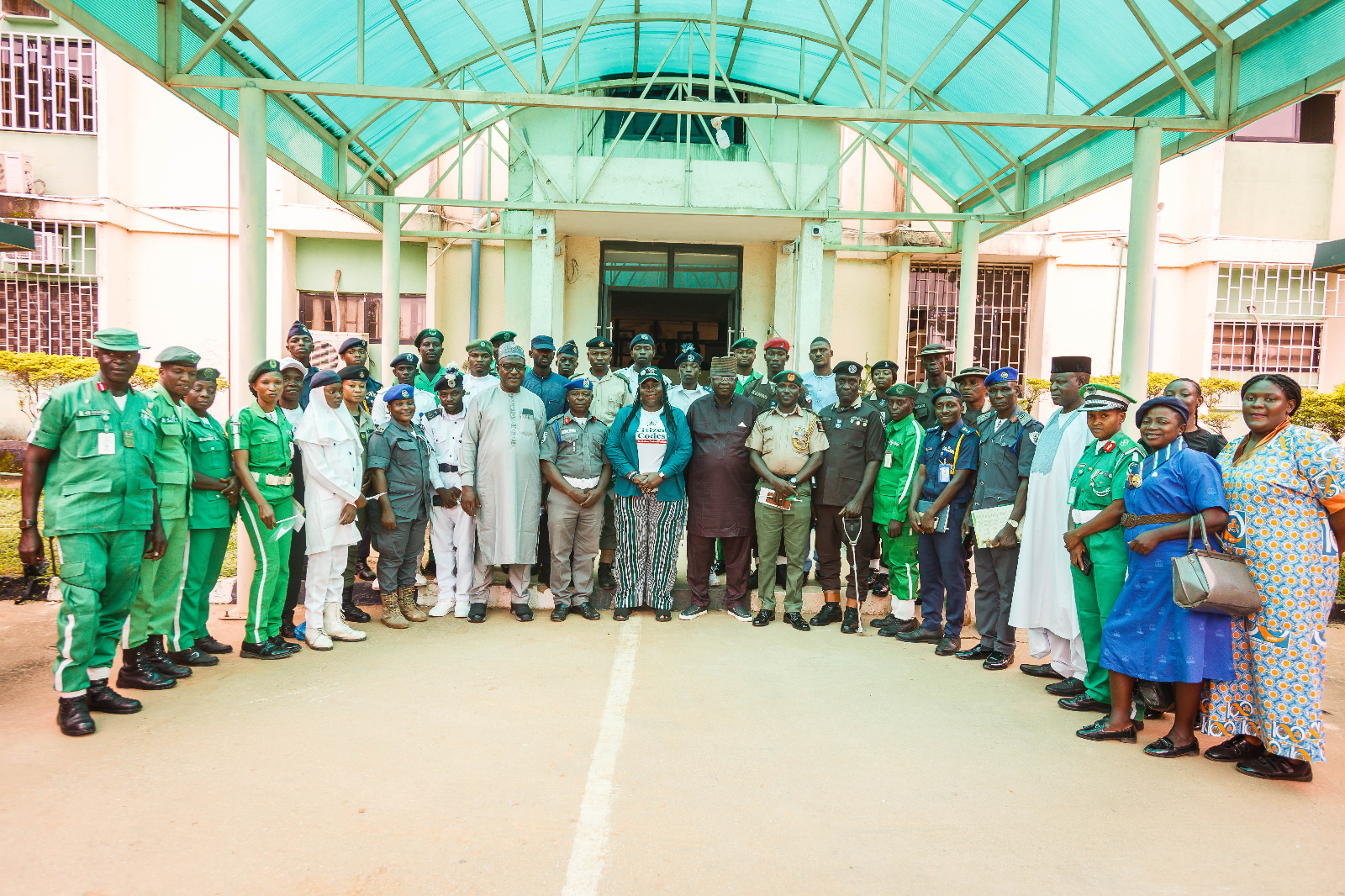
This call was made during a One-Day Stakeholders’ Workshop on Civic Responsibility and Voluntary Organizations, held on Thursday at the NOA Headquarters Conference Room in Garki, Abuja.
Delivering the keynote address on behalf of the Director-General, Mallam Lanre Issa-Onilu, Dr. Kemi Afolayan, Director of Civil Values and Democracy Education at the Agency, underscored the importance of civic engagement in shaping a morally upright and cohesive nation.
According to Dr. Afolayan, Nigeria is at a defining moment in its national journey, confronted with challenges such as insecurity, corruption, civic apathy, and declining moral standards. She stressed that overcoming these issues requires more than government intervention—it calls for the active participation of citizens through organized voluntary efforts.
“Voluntary organizations have historically served as the heartbeat of community mobilization and civic training in Nigeria,” she said.
She highlighted the legacy of organizations like the Boys Scout (1915), Girls Guide (1919), Boys Brigade (1908), Man O’ War (1950s), Red Cross (1960), National Cadet Corps (1970), and the War Against Indiscipline Brigade (1984), which was absorbed into NOA in 1989.
“These bodies laid the foundation for youth engagement, national unity, discipline, and value reorientation. Their revitalization is critical to our national transformation efforts,” she added.
Dr. Afolayan defined civic responsibility as the collective actions, behaviors, and attitudes that promote societal development—including lawfulness, tax compliance, respect for institutions, political participation, volunteerism, and peaceful advocacy.
“A responsible citizen doesn’t just obey the law—they work actively for the good of society,” she noted.
She also spotlighted the NOA’s flagship National Identity Project, approved by the Federal Executive Council in 2024. Under this initiative, President Bola Ahmed Tinubu is expected to formally unveil the National Values Charter—a social compact outlining the responsibilities of both government and citizens.
Dr. Afolayan explained that the workshop was organized to acquaint participants with two core components of the Charter: The Nigerian Promise and The Citizen’s Code. These frameworks, she said, promote values such as democracy, equality, peace, meritocracy, and inclusion on one hand, and discipline, tolerance, accountability, and environmental responsibility on the other.
“You are our natural allies in this civic reawakening campaign,” she told participants. “Your influence can help rebuild trust in institutions, spark national pride, and model the ideals we hope to see in every Nigerian.”
She identified four key areas where voluntary groups can make transformative contributions: civic education and voter sensitization, national unity promotion, value reorientation, and advocacy for good governance. While acknowledging the challenges these groups face—including limited funding, poor coordination, and insufficient access to civic education materials—she urged them not to relent.
“Let us transcend these limitations through transparency, shared vision, and continuous collaboration with NOA,” she said.
Dr. Afolayan reaffirmed the agency’s commitment to supporting voluntary organizations through training, digital outreach, civic education campaigns, and peace-building initiatives. She encouraged participants to internalize and promote the agency’s signature messages, including: “I am a real Nigerian,” “We must build Nigerians to build Nigeria,” and “Nigeria happens to me positively.”
Her recommendations included formalizing partnerships with voluntary groups, recognizing outstanding contributions, launching leadership development initiatives, and leveraging digital platforms to attract and retain the interest of young Nigerians.
“The civic health of a nation determines its future,” she concluded. “This workshop is not an end but the beginning of a renewed national effort. Together, we can shape a morally grounded and united Nigeria.”
In a goodwill message, Mrs. Ayisola Olowoyo, Director of Human Resources Management at NOA, lauded the commitment of participants to national service and urged them to continue their efforts at the grassroots level.
Rhodas Sardus also facilitated a session on the National Values Charter manual, providing participants with practical tools and strategies for implementation within their local communities.
The event brought together a wide spectrum of stakeholders, including representatives of voluntary organizations, civil society groups, and civic educators. Participants pledged renewed commitment to advancing civic values and fostering national cohesion through the NOA’s reorientation campaign.